Does reality shape science fiction or does science fiction shape reality? Current events in the news chronicle advances in artificial intelligence, genetic breakthroughs, space exploration, and more. Much of these incredible achievements were foreshadowed by science fiction writers.

Science fiction has a long history of anticipating events and technologies that later became reality, often inspiring real-world innovation. These predictions range from communication devices and artificial intelligence to space travel and medical advances. How to integrate current events starts with understanding how other authors have used technology in their works to make their science fiction more realistic.

Some of these technologies include the flip-style communicator used by Captain Kirk in the 1960s TV series Star Trek, which predated the first mobile flip phones. Video conferencing was a common feature in many science fiction works, including the 1960s cartoon The Jetsons, Stanley Kubrick’s film 2001: A Space Odyssey (1968), and the 1982 film Blade Runner. The chillingly intelligent and voice-controlled computer HAL 9000 from 2001: A Space Odyssey foreshadowed modern virtual assistants like Siri and Alexa. The 1980 film The Empire Strikes Back showed Luke Skywalker receiving a bionic hand, and the 1970s TV show The Six Million Dollar Man featured bionic implants. William Gibson’s 1984 novel Neuromancer popularized the term “cyberspace” and envisioned a vast, interconnected digital network, long before the World Wide Web became widespread. The list goes on and on.
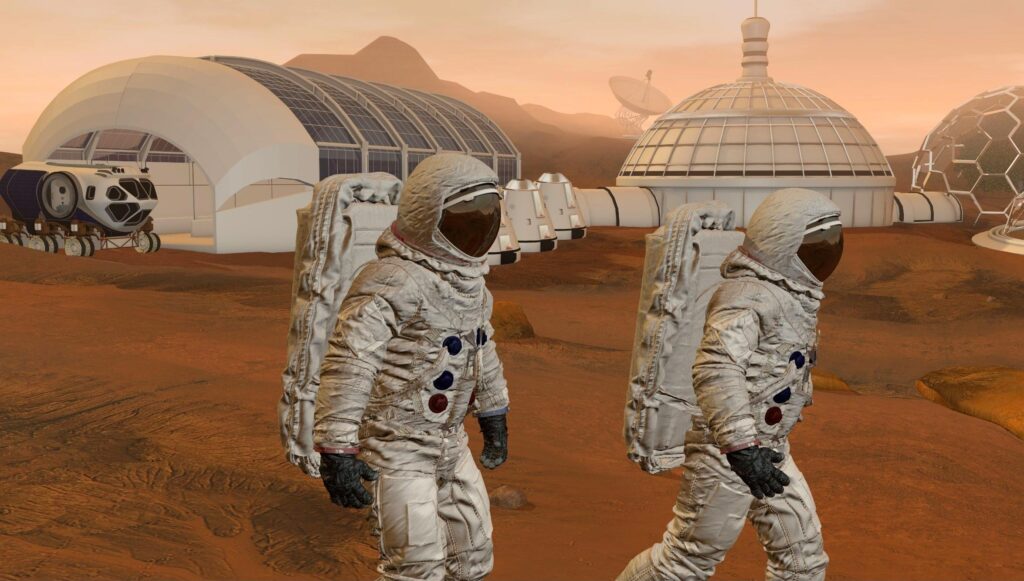
First Mars colony
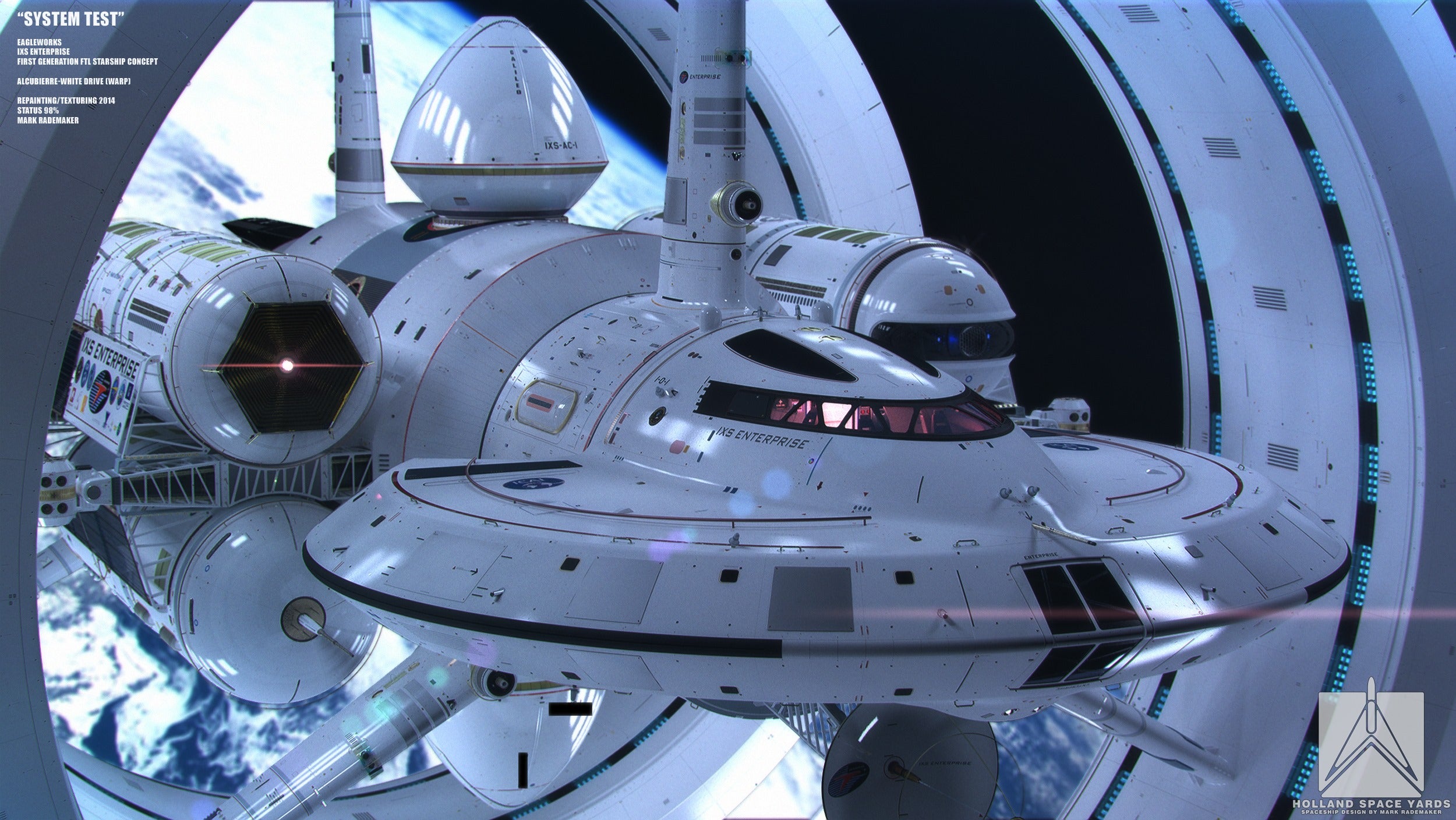
First warp drive ship

Everything’s science fiction until someone makes it science fact. 

Ray Bradbury

My Favorite Sci-fi Show

Current events don’t have to revolve around technology. Science fiction can address ideologies too. As a boy, and as an adult now, I loved Star Trek. The original series, or TOS to fans, presented a hopeful future, where the “ism’s” that plague mankind were eradicated: racism, sexism, nationalism, materialism, and pessimism. Its creator, Gene Roddenberry, showed us the endless possibilities of a united human race.

Keeping up to date with current events in the world can provide the foundation for a science fiction story. Roddenberry used every episode of Star Trek to explore a moral or social issue, most of which were being addressed in reality during his time. It was one of the many things that drew people to the show.

How has it and other science fiction works shaped current events and vice versa?


7 responses to “How to Explore Current Events Through the Lens of Science Fiction”

  1. Aaron Philip Avatar
    Aaron Philip

    Very topical given the recent Star Trek Day! The original series gave us visions of handheld communications and TNG went even farther with replicators (*nudge nudge* 3D printing). Engineers and scientists openly admit being inspired by these devices as well! Also Roddenberry’s vision of a multi-ethnic bridge crew at the height of the Cold War and Civil Rights movement was radical. I mean, Chekov, literally a Russian character, modeled a future beyond the Cold War. Recent sci-fi has reflected our Post-9/11 security concerns about terrorism and government surveillance. Do you think there is equal merit to anxiety-driven sci-fi portrayals of dystopian “worst case scenario” futures?

    1. emcs2_hhv7as Avatar

      Thank you for your post. Yes, Star Trek day was September 8th! 59 years and still going strong.

      I worry about self-fulfilling prophecies. Too much of modern sci-fi is dystopian, apocalyptic future driven. Writers are preying on our worst fears and in a way giving them more credibility than they deserve. Yes, the world has legitimate fears, but also real hope. We need to showcase what we can achieve and stop focusing on the negative.

  2. emcs2_hhv7as Avatar

    Question – Who will get to Mars first: NASA, SpaceX, China, or Russia?

  3. emcs2_hhv7as Avatar

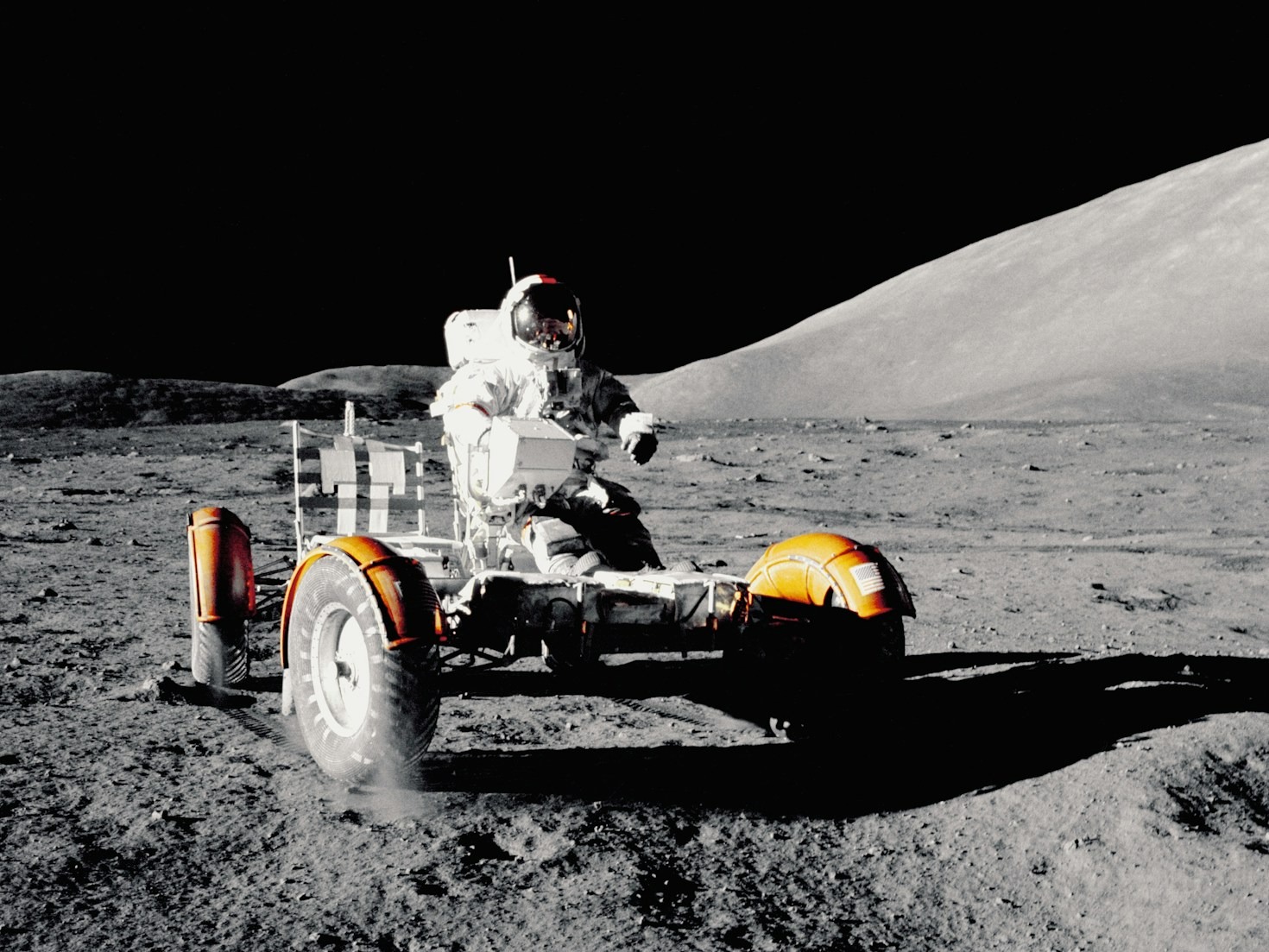
    Drama is unfolding in space exploration right now as NASA struggles to get its first Artemis mission off the ground, literally. The program has struggled with budget overruns and time delays (a full decade late). Critics argue that it is not an efficient way to return humans to the moon and is unnecessary for a Mars landing. If this first flight is successful, then NASA hopes to land humans on the moon with Artemis III sometime in 2028. Mars will wait until 2035 at the earliest.

    So, is it worth it? With the proliferation of private-sector space exploration and tight congressional budgets, this is an appropriate question. There was enormous pride in the Apollo Program that culminated in America being the first, and only, country to put a person on the moon. Is Artemis a holdover of nationalism or a legitimate scientific endeavor?

    Either way, I am anxiously watching and waiting for the final countdown.

  4. emcs2_hhv7as Avatar

    While NASA, China, and Elon Musk vie to put the first human on Mars, some scientists are thinking further out, much further out. A group of elite physicists announced last month that they developed the world’s first model of a theoretically possible warp drive. Once again, science fiction is inching closer to science reality.

    Warp drive, for those of you who are not in the know, is a term created by Star Trek writers to explain how the U.S.S. Enterprise travels faster than the speed of light, or superluminal. Essentially, it involves colliding large amounts of matter and antimatter to generate pure energy, which is focused by di-lithium crystals to bend spacetime around the ship. This folding forms a kind of localized distortion. So, the ship surfs through space on its own wave.

    In 1966, when the television series debuted, it was purely theoretical and considered impossible. Today, it is tantalizing closer. Mexican theoretical physicist Miguel Alcubierre first proposed a plausible warp drive in 1994. It is based on a derivative of Einstein’s Field Equations and does not violate any of the laws of relativity. Dubbed the Alcubierre Drive in his honor, it has been a scientific curiosity for over two decades.

    The Applied Physics organization, along with NASA, has been quietly expanding on Alcubierre’s work. They are much closer now to making it work. A faster-than-light ship is still decades out, if at all, but it is now firmly in the realm of plausibility.

    Why does this matter? Long-term planning has not been a strength of the American business paradigm. Most investors demand a two to three-year return on investment. Some may look at five years. Only a small handful are looking decades into the future. Quarterly profit margins rule supreme on Wall Street.

    China, for example, began its pursuit of greater global reach in the 1950s, seventy years ago. They have well played a long waiting game that is finally paying off. We used to think that way, but we ultimately abandoned it for short-term profit. Getting rich in one person’s lifetime is all that matters.

    If we could only get behind ideas that are bigger than one person, imagine what we could accomplish. Seven years was all it took from President Kennedy vowing America would be the first on the Moon to Neil Armstrong setting foot on its surface. Most of the technology hadn’t been invented at the time of his speech. Kennedy stated, “We choose to go to the moon in this decade and do the other things, not because they are easy, but because they are hard, because that goal will serve to organize and measure the best of our energies and skills.”

    Not to use a cliché, but space is the final frontier. Think of the opportunities if we developed a ship capable of traversing the vast distances. Let’s make science fiction real and go exploring.

  5. emcs2_hhv7as Avatar

    Approximately 6,000 planets have been positively discovered by astronomers so far. In addition, there are an estimated 100 sextillion to over 200 sextillion planets in the observable universe. With hundreds of billions of galaxies, each containing billions of stars, most of which host planets, the total number is staggering, as evidenced by the Milky Way alone having up to 400 billion stars. So, it has been a forgone conclusion by most people that there is other life out in the cosmos somewhere.

    According to a 2021 Pew Research Center Survey, roughly two thirds of American believe intelligent, alien life exists on other planets. I’m amazed it is that low. One third also believe that aliens have visited Earth or that UFOs are actual extraterrestrials. Several sources report that there is a growing acceptance of the idea that we share the universe with other races. Maybe we can thank science fiction writers at least partially for that.

    My question is, would the discovery of alien life fundamentally change our perspective on life here on Earth? In the Star Trek universe, the unexpected arrival of aliens to our planet changed the course of human civilization. They came to check out the newly invented warp drive technology, invented by the legendary Zefram Cochrane. On April 4, 2063, in his Phoenix spacecraft, he became the first human to travel faster than light. A passing Vulcan survey ship intercepted the warp signature and came to investigate, and the rest is part of Star Trek lore.

    The Vulcans themselves did not change human perception, but their mere presence did. The realization that we are not alone prompted Earthlings to abandon materialism and money, stop fighting amongst ourselves, end racism, and seek a higher purpose. Out of the ashes of WWIII, they created a utopia. All of this is noble and grand, but is it realistic?

    This is essentially the basis of Star Trek. We can, if we choose, create an idealistic society that could reach out to the stars as a united species in peace and the spirit of exploration for exploration’s sake. I wonder if we would actually do that? Are we too hard-wired for competition, greed, violence, and xenophobia to ever give them up? At the risk of being cynical, I think we are.

    Recently in the news, there have been suggestions that the government is going to release revelations about the existence of extraterrestrials. The assumption for many people is that the government has been hiding evidence of them for years. So, are they ready to come clean? What is their motivation for telling us now? Or is it just another diversion?

    If there is hard evidence aliens exist, will it change our direction? I do not see such information stopping the wars we are in, ending corporate greed, or enlightening bigots. Of course, I wish it would. However, I am extremely doubtful. I am a huge Star Trek fan, but I am resigned that it will always be sci-fi, which is too bad because the writers paint a very nice future for us.

  6. emcs2_hhv7as Avatar

    An unbelievable and historic event happened as Artemis II splashed down today! This truly was an achievement for all humankind. Even though it was a United States NASA program, the Artemis program featured extensive international collaboration, forming the most diverse human space exploration coalition in history. Key partners included the European Space Agency (ESA), Japan (JAXA), and Canada (CSA), which contributed hardware, including the Orion European Service Module and components for the lunar gateway. Over 60 nations have signed the Artemis Accords to guide sustainable space exploration. Plus, one crew member was Canadian. Let’s not make it about America’s “dominance” in space. Remember, it was always about peaceful international exploration in space.

Leave a Reply

Your email address will not be published. Required fields are marked *